
JERUS-IT-ARTS International Contest
Music, Dance, Performing and Visual Arts
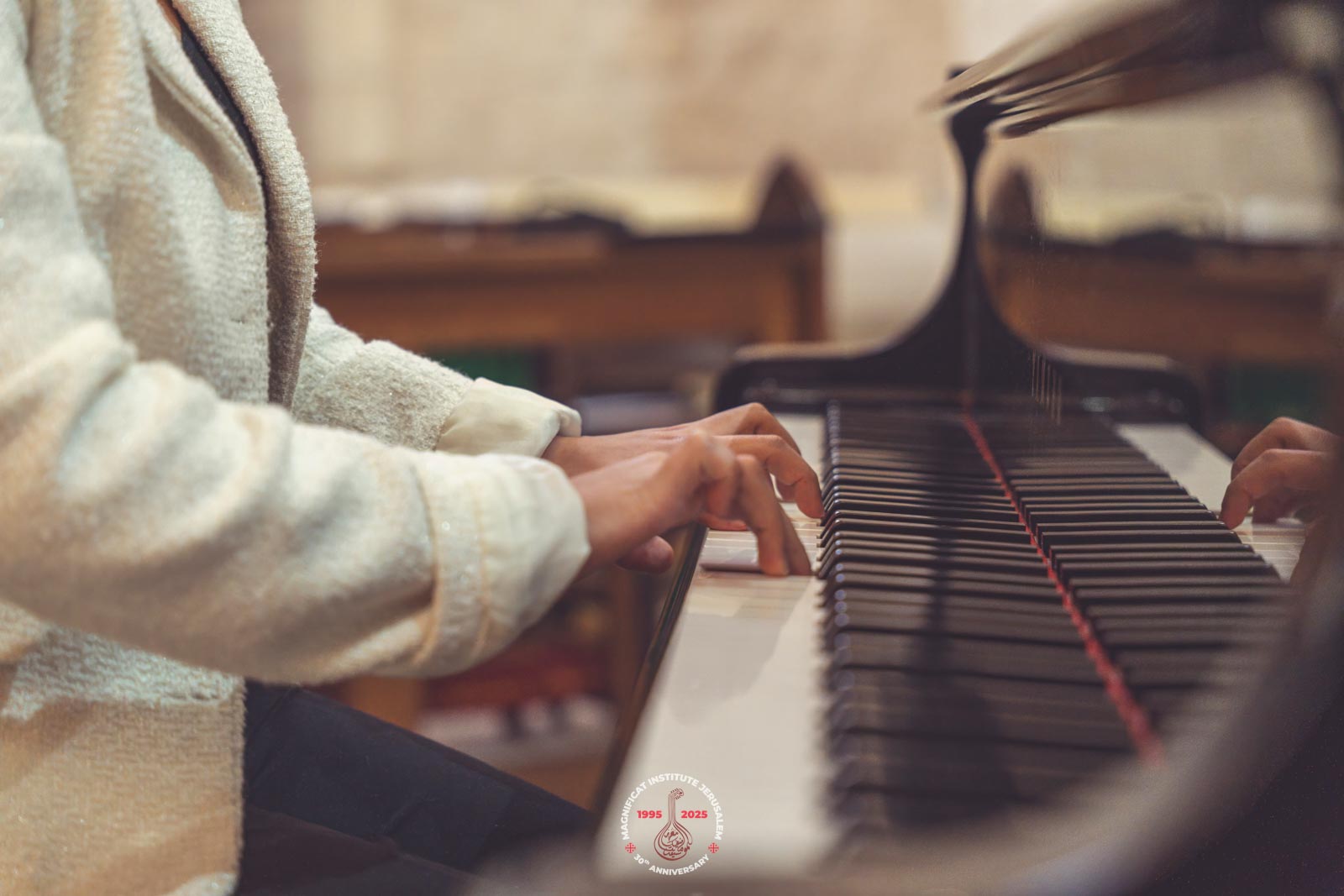
The contest invited the creation of artistic and performative works that reflect, interpret, or make visible the historical and contemporary connections between Italy and Jerusalem and, more broadly, across the Mediterranean.
The call for artworks resulted in the selection of 4 contributions that foster intercultural dialogue, recognise and value diversity, and generate compelling artistic narratives across music, dance, and visual media.
The contest’s participants will be celebrated in a dedicated online event on 8 April at 6 pm CET. Follow our social media channels to attend the event and engage in dialogue with the artists.
The selected projects
Mahmoud Abuwarda
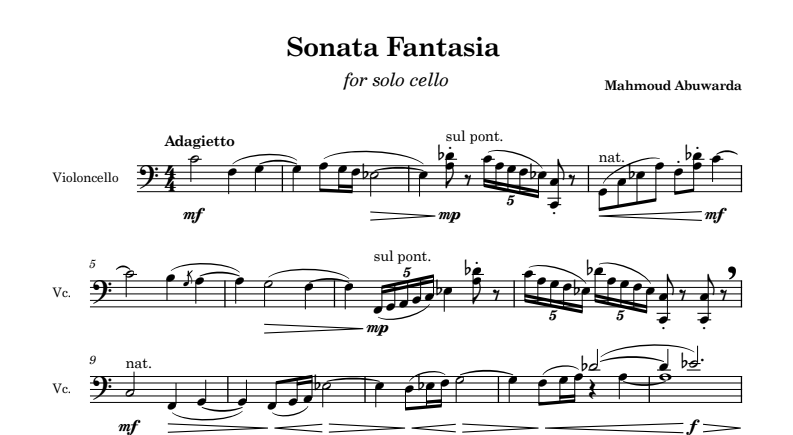
Sonata Fantasia for solo cello
Mahmoud Abuwarda is a Palestinian professional, composer and guitarist from Gaza, residing in Istanbul.
In Sonata Fantasia for solo cello, composed specifically for the JERUS-IT-ARTS project, the author explores the cello as a meeting point between different traditions, in a work composed specifically for the JERUS-IT-ARTS contest. The work blends Western classical structure with melodic and rhythmic inflections inspired by Eastern musical traditions, treating the latter not as literal quotations but as an integral part of the musical fabric.
The work demonstrates strong adherence to the project’s theme, unfolding across multiple expressive registers, revealing its full emotional depth through repeated listening.
From a compositional standpoint, the score displays advanced and fully conscious writing. The decision to adopt a purely instrumental approach, without the use of text, allows the author’s identity to emerge implicitly while offering a more abstract and universal perspective.
Yousef Sakhnini
Music composition for piano solo
Chiara Geraci
Elaia
Andrea Strizzi
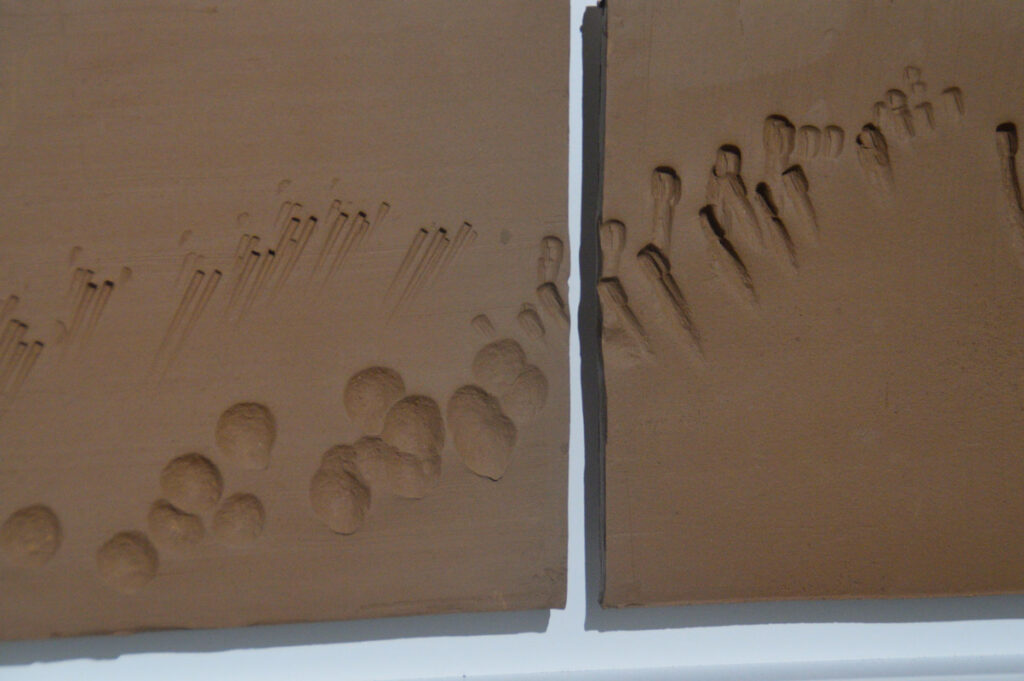
Toccare il suono - Impronte sonore
Andrea Strizzi is a sculptor and decorator, born in Giussano, who has placed the interaction between drawing, sculpture, and music at the center of his work. The work is accompanied by sounds of beats of varying intensity. It proposes a musical and tactile journey engraved in clay, a material that unites all the shores of the Mediterranean. It materialises the relationship between tactile and auditory perception through the interaction of the viewer, who is invited to touch the artworks while simultaneously listening to the sounds produced during the performative action.
The video functions primarily as a documentation and extension of a live, participatory artistic experience. The artwork is conceived as an open process in which the generative act of carving signs into clay is repeated and activated by the public, allowing participants to construct their own paths through tactile engravings and corresponding sounds. This approach, designed to engage multiple senses and to be accessible also to visually impaired audiences, opens diverse modes of reception and represents a meaningful exploration of inclusivity.
Federica Manzoli - contest coordinator